
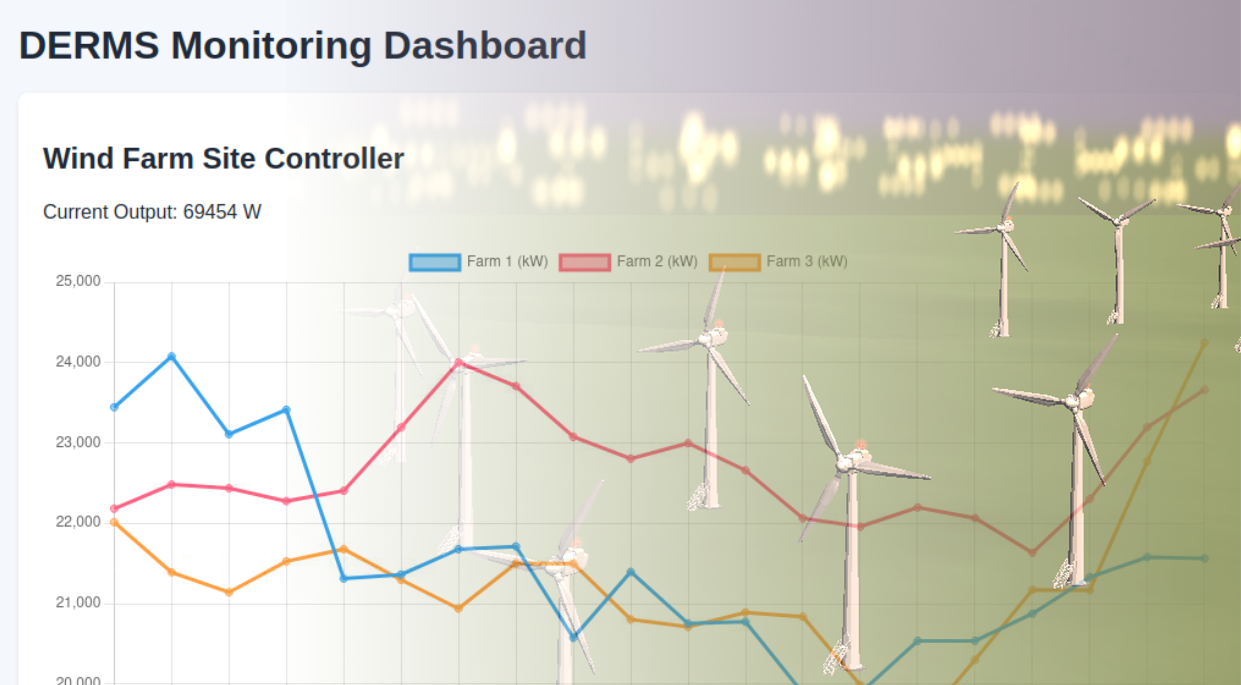
Announcing our third course in our Distributed Energy Resources (DER) series!
Use promo code DER20 at checkout for 20% off!
 |
 |
 |
||||
| $49/Month | $45/Month | $39/Month | ||||
| SUBSCRIBE | SUBSCRIBE | SUBSCRIBE | ||||
|
|
Not ready for the range? First learn foundational concepts of cybersecurity, industrial control systems (ICS), operational technology (OT), and the unique challenges of securing ICS.
Not sure what a term or acronym means? You’re in the right place. This glossary is your go-to guide for understanding the key terms and acronyms used in OT cybersecurity. Whether it's a protocol, standard, or security concept, we’ve broken it down to help make your training smoother and more approachable. Looking for a term we don't have? Let us know!
Announcing our third course in our Distributed Energy Resources (DER) series!
Use promo code DER20 at checkout for 20% off!
Announcing our first course in a new series on Distributed Energy Resources (DER)!
Use promo code DER20 at checkout for 20% off!
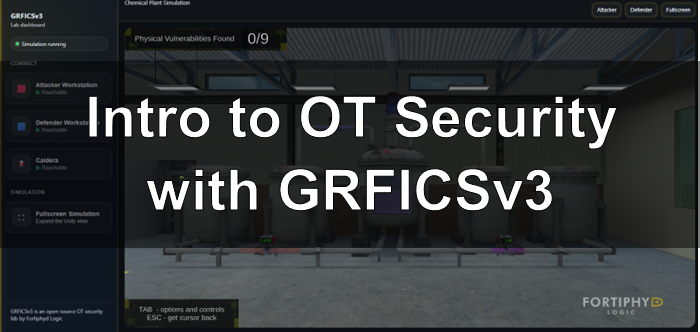
OT security can be difficult to learn without seeing real systems in action.
Intro to OT Security with GRFICSv3 uses hands-on labs, walkthrough videos, and interactive exercises to introduce core OT security concepts in a realistic industrial environment. This course is designed for beginners who want to understand how industrial systems work, how they fail, and how security and safety intersect in the real world.
By the end of this course, learners will be able to:
Explain the basic structure of OT and ICS environments, including the roles of PLCs, HMIs, control networks, and supporting systems.
Set up and run their own local OT security lab using GRFICSv3, and retain access to it for continued exploration after the course.
Identify common OT security risks and attack techniques, such as network scanning, protocol misuse, and trust assumptions in industrial networks.
Observe how cyber actions translate into physical process behavior, including how changes to logic, setpoints, or network traffic can impact safety.
Reason about attacks from both attacker and defender perspectives, focusing on cause-and-effect rather than memorizing tools or exploits.
Describe foundational OT security and safety concepts, including segmentation, visibility, change management, and defense-in-depth.
Why is it so hard to get IT and OT to work together on security? They have different priorities, strengths, and technology and can struggle to communicate their needs. Learn how to communicate with both sides in this introduction to ICS security. After completing this module, users will be able to:
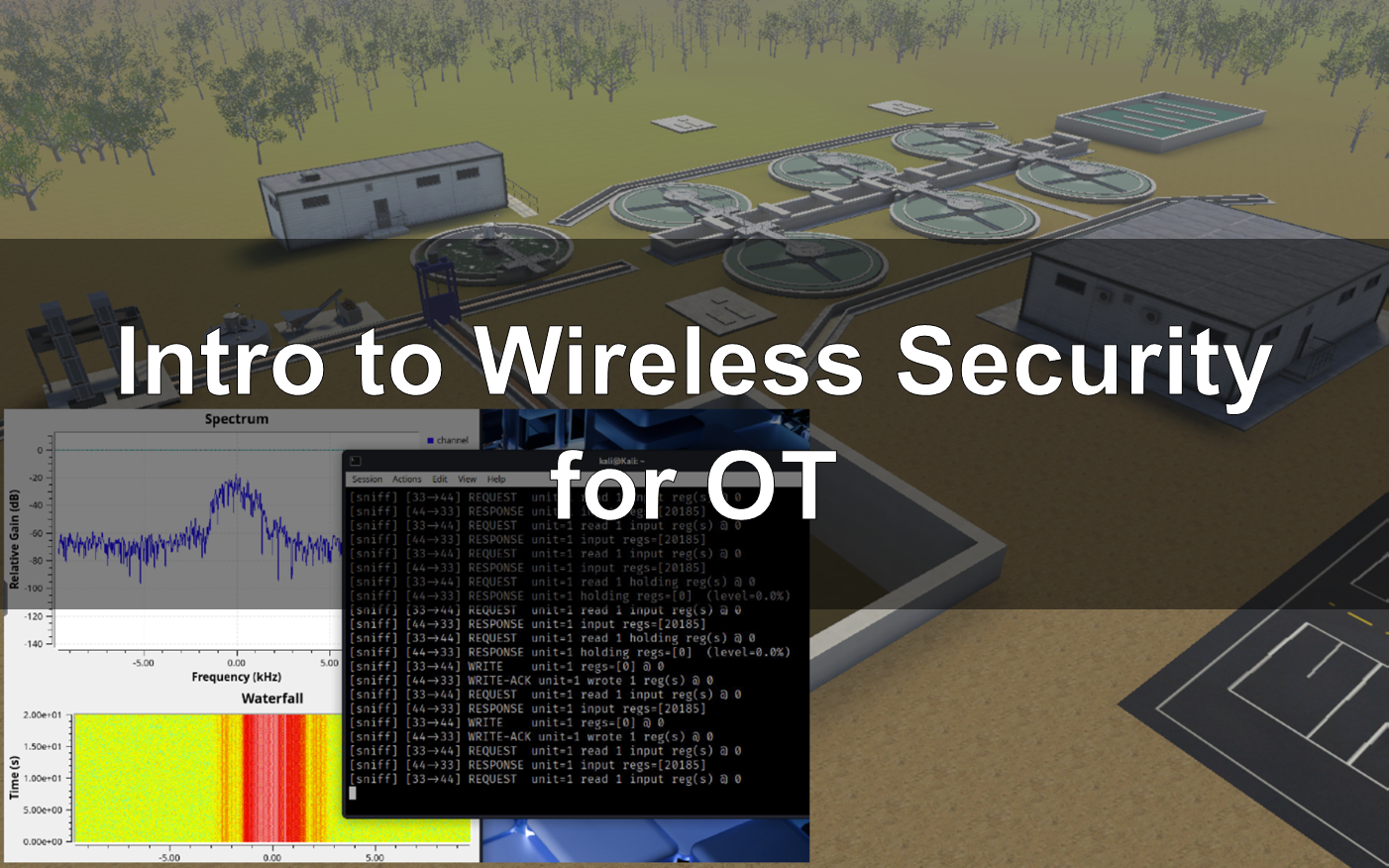
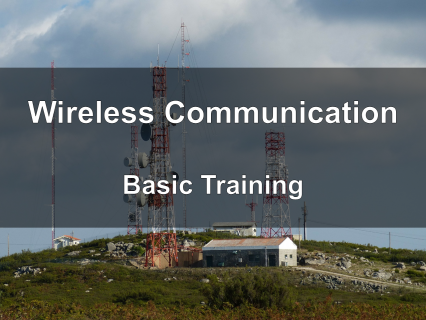
Industrial plants run on wireless. Telemetry radios connect control rooms to remote pumps, tanks, and sensors that would be too costly to reach with cable. It is a valuable, everyday engineering choice, but many of these links were installed with no encryption or authentication, on the assumption that no one would be listening.
This course shows what happens when that assumption fails. Using a safe, fully-simulated wastewater treatment plant, you will work through the three core wireless attacks one at a time: sniffing (reading traffic off the air), jamming (knocking a link offline), and spoofing (feeding the plant false data). Each attack is a short, guided, hands-on exercise on a real attacker toolkit, and each one ties back to a plain-language explanation of why it works.
The course builds to a capstone: you will spoof a false reservoir level, defeat a safety interlock, and cause an overflow while the operator's screen still shows normal. This is a faithful recreation of the year-2000 Maroochy Shire incident, where an attacker used radio equipment to spill hundreds of thousands of litres of sewage. You will finish by mapping every attack to the defense that stops it, and by learning the design principle that keeps a single spoofable reading from ever causing a disaster.
No radio, programming, or security background is required.
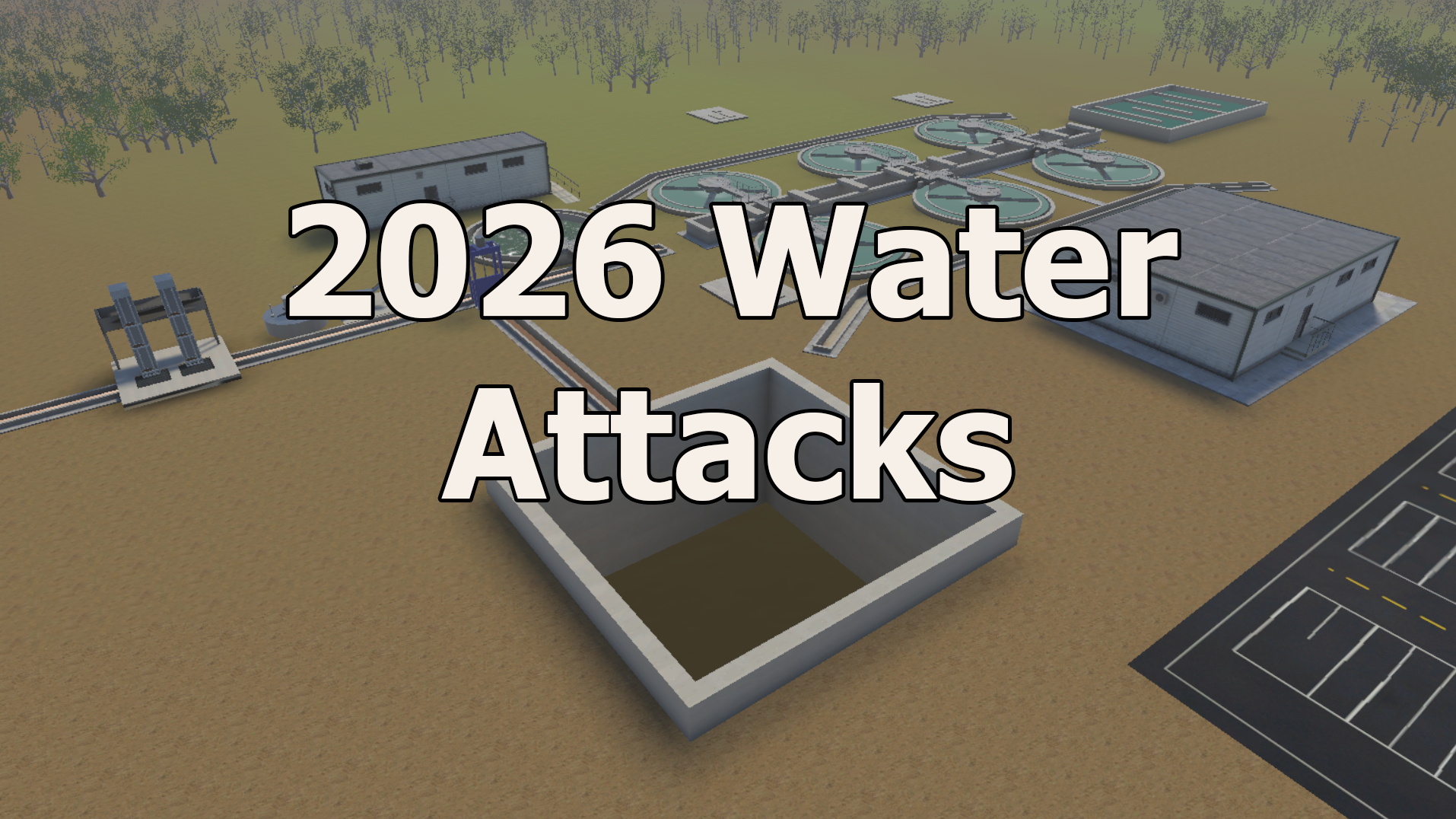
This course walks security professionals and engineers through a single realistic incident, from both the attacker's and the defender's seat, built around the 2026 coordinated cyberattacks on American water utilities.
Students first use an internet-scanning tool to find and fingerprint an internet-exposed PLC (using OpenPLC as a stand-in for the real controllers targeted in the actual incident), connect to it with the vendor's own engineering software, and disrupt the physical process it controls, reproducing techniques mapped to MITRE ATT&CK for ICS (T0883, T0886, T0859, T0843, T0816, T0827/T0826).
Students then switch to defending: they trace and cut the unmanaged cellular connection that let the attacker in, restore the controller from a known-good backup, and rebuild remote access safely behind an authenticated, least-privilege VPN tunnel. Along the way the course covers why ICS equipment ends up exposed to the internet in the first place, how to respond safely and in the right order during a real incident, and the practical hazards of active network scanning on live OT systems, closing with a full crosswalk of the course content to NIST CSF 2.0, SP 800-53, and the NICE Framework.
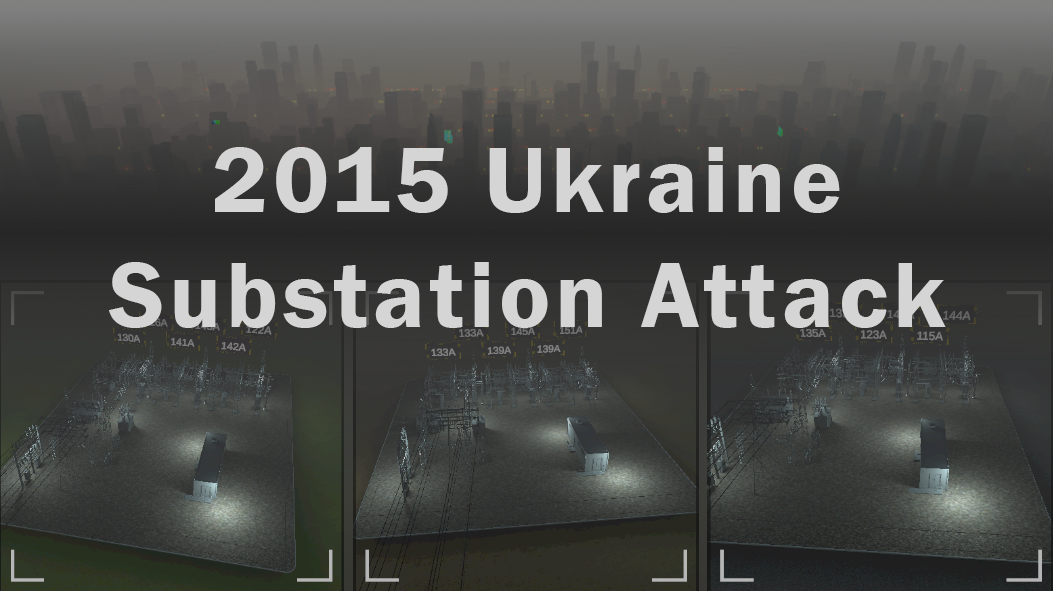
(Lab) Step into the role of Sandworm Team and recreate the December 23, 2015 cyberattack that cut power to roughly 225,000 Ukrainian customers, the first confirmed cyberattack to cause a large-scale blackout. Starting from a single phishing email, establish a foothold on an IT workstation, pivot into the OT network over VPN, and use the operators' own HMI to open breakers across a simulated substation. Then carry out the same anti-recovery playbook the real attackers used — bricking serial-to-ethernet gateways, cutting UPS power, and deploying a KillDisk-style wiper — to understand firsthand why the real outage lasted hours instead of minutes.
After completing this course, users will be able to:
• Gain and persist a foothold on an IT network through phishing, C2, and credential theft
• Pivot from IT to OT through VPN infrastructure and enumerate a segmented control network
• Access and operate an HMI to manipulate breakers and cause a physical outage
• Execute anti-recovery techniques — firmware sabotage, UPS shutdown, and disk wiping — to disable a defender's recovery tools
• Map each stage of the attack to real-world ATT&CK for ICS techniques and evaluate the defenses and recovery procedures that would blunt it
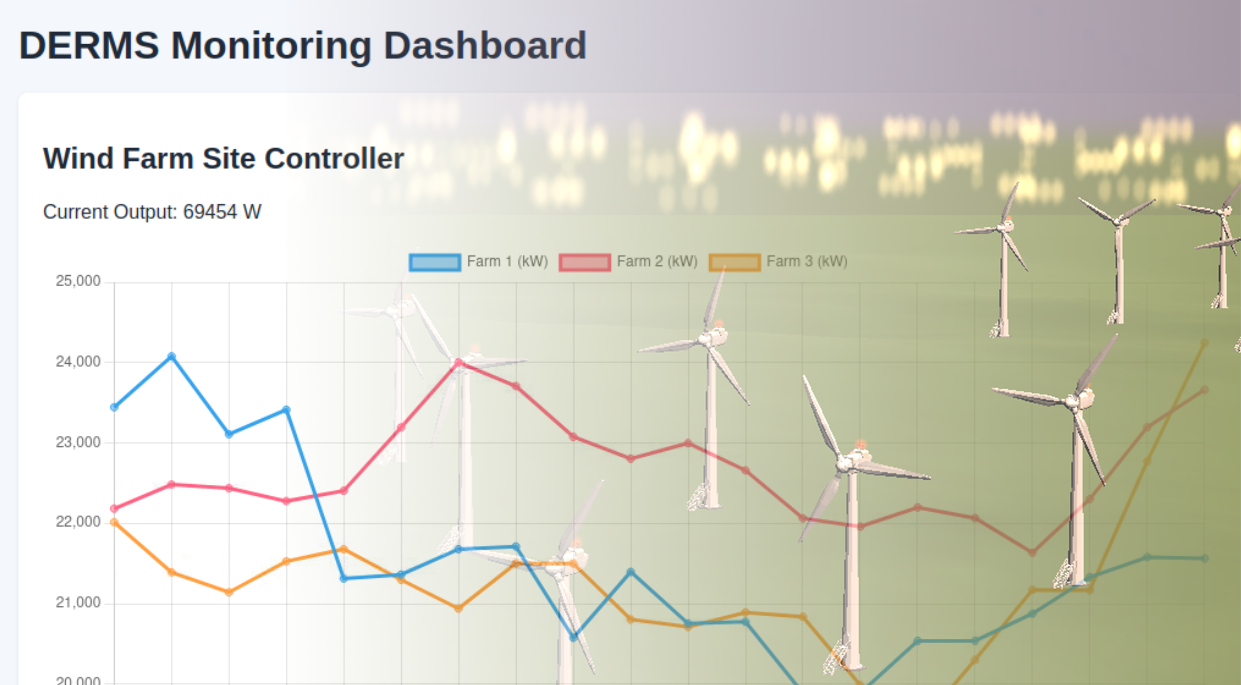
This hands-on course explores the cybersecurity properties and vulnerabilities of the IEEE 2030.5 protocol (also known as SEP2) as used in Distributed Energy Resource (DER) environments. Through a series of guided exercises, learners examine how the protocol's cryptographic design defends against common attacks and where those defenses break down. Topics progress from foundational concepts through realistic attack scenarios involving identity compromise and PKI trust failure, giving practitioners a clear-eyed understanding of both the protocol's guarantees and its limits.
By the end of this course, learners will be able to:

Distributed energy resources (wind farms, solar installations, and combined heat and power plants) represent one of the fastest-growing and least-secured segment of the modern power grid. This course uses the December 2025 attack on Poland's DER infrastructure as a case study and replicates its kill chain in a hands-on lab environment. Students will move through the full attack sequence: passive reconnaissance using Shodan, credential-based VPN compromise, internal scanning and ICS device enumeration, DNP3 protocol exploitation, RTU bricking, and coordinated major attack. The second half of the course reverses perspective, challenging students to harden each layer that was exploited in the attack phase. Lab exercises use OpenVPN and DNP3-speaking RTUs to model the real-world architecture common to utility-scale DER deployments.
After completing this course, students will be able to:

(Lab) In this advanced level module, take a deep dive into the SunSpec Modbus protocol and management software of a simulated home Distributed Energy Resource system to understand how to attack and harden one of the fastest growing ICS sectors. After completing this chapter you will be able to
This course introduces the foundational principles of Cyber-Informed Engineering (CIE), a framework that integrates cybersecurity into the engineering and design of operational technology systems. Whether you're an engineer, operator, or technical manager, you’ll learn how to reduce the consequences of cyber events by building resilience into the systems themselves. Through a combination of lecture material and hands-on lab exercises, you'll explore real-world scenarios that bring each principle to life, helping you turn “What if?” into “Even if.”
After this course, participants will be able to:
Disclaimer - This course references materials developed under contract for the U.S. Department of Energy by the Idaho National Laboratory and the National Renewable Energy Laboratory. All rights to these materials remain with their respective owners. This course is not affiliated with or endorsed by the U.S. Department of Energy or any of its contractors.
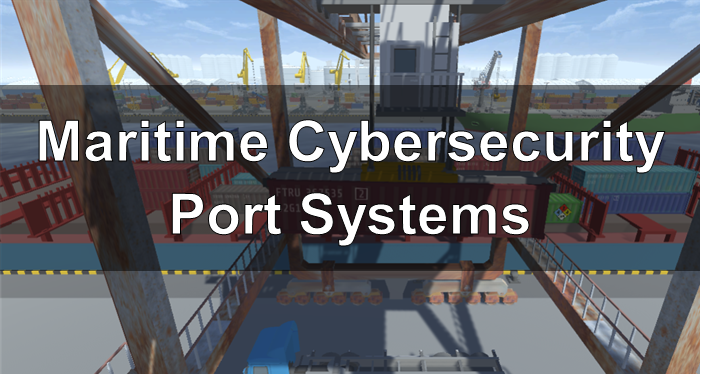
This lab-driven course trains practitioners to detect, investigate, and mitigate real-world cyber threats to port operations through a series of immersive exercises: a simulated Port of Antwerp style insider/drug-smuggling compromise, a NotPetya-style ransomware outbreak that cripples terminal logistics, targeted attacks against ship-to-shore crane control systems, and protocol-level exploitation of the Omron FINS protocol. Participants learn both offense and defense, as well as a quick overview of relevant regulations and guidelines.
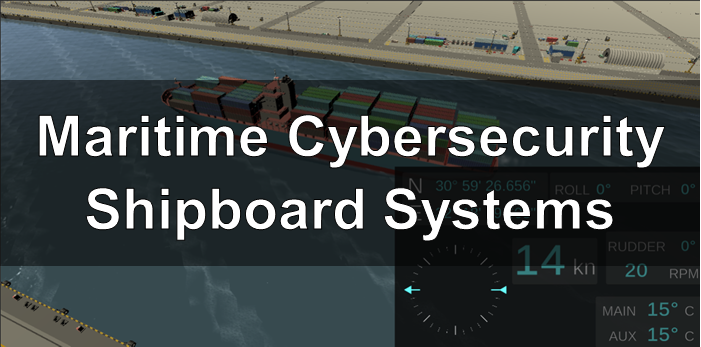
The maritime transportation system (MTS) is a critical component of the world economy, with the majority of all goods transported by sea or waterways. Ports serve as essential hubs for this trade, handling millions of containers daily, ensuring the smooth flow of raw materials, energy supplies, and consumer products. However, as ports become increasingly digitalized, the potential for cyberattacks to cause massive financial damage increases, as was the case for the NotPetya ransomware.
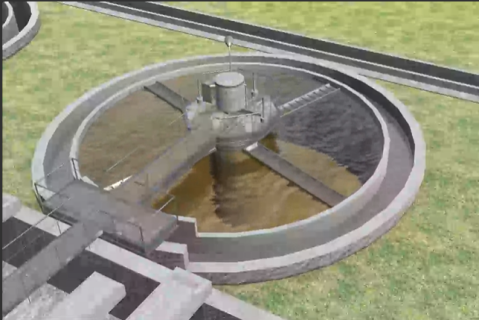
S7 is the proprietary protocol used by older Siemens automation equipment. In this module, learn about attacks and defenses focused on the S7 protocol!
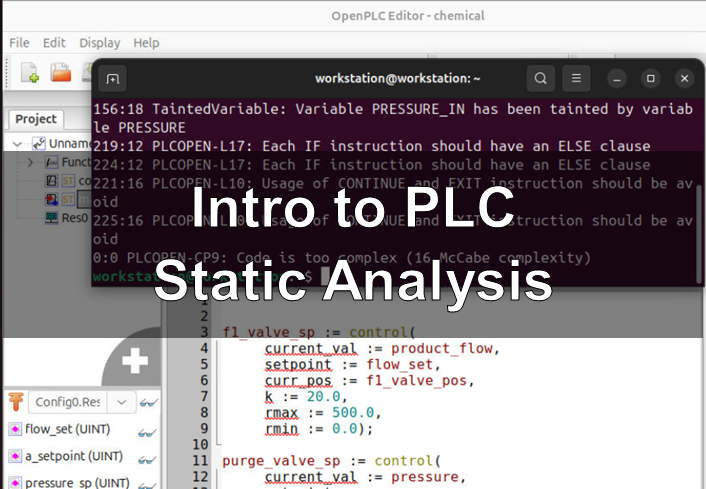
Writing "secure" PLC programs is hard, but static analysis can help. This is a practical short course designed to help engineers, PLC programmers, and security professionals improve the security and quality of their PLC programs. Participants will learn how to apply static analysis techniques to PLC programs, using an enhanced version of the open-source IEC-Checker tool to detect common coding flaws, such as missing input validation and poor coding patterns, in the IEC 61131-3 Structured Text language. The course covers both the fundamentals of static analysis and hands-on guidance for integrating these practices into existing workflows, helping teams build more robust and secure control logic. No prior experience with static analysis is required.
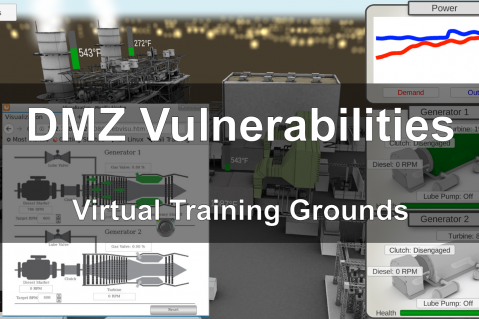
(Lab) Take on the role of an attacker in the DMZ network of a power plant, learning how to exploit the common vulnerabilities there and pivot deeper into the ICS network. After completing this chapter, users will be able to:
• Use basic Linux commands and tools (whoami, pwd, ls, mkdir, nano, cd, mv, cp, rm, man)
• Run basic network scans with nmap
• Understand the function of historians in ICS networks
• Test for SQL injection vulnerabilities
• Perform man-in-the-middle (MITM) attacks using ARP spoofing
• Explore ICS protocols using Wireshark
• Run password cracking tools against remote access protocols (SSH)
• Check for weak passwords by running a cracking tool against password files
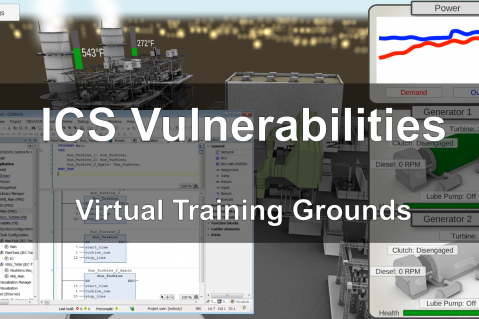
(Lab) After pivoting into the ICS network, continue your exploration of common ICS protocol and software vulnerabilities to reprogram a PLC and cause a power outage in the simulated power plant. After completing this chapter, users will be able to:
• Run advanced network scanning to enumerate ICS devices
• Run password cracking tools against remote access protocols (RDP)
• Understand the function of HMIs in ICS networks
• Perform man-in-the-middle (MITM) attacks using ARP spoofing
• Explore ICS protocols using Wireshark
• Understand how PLCs are programmed
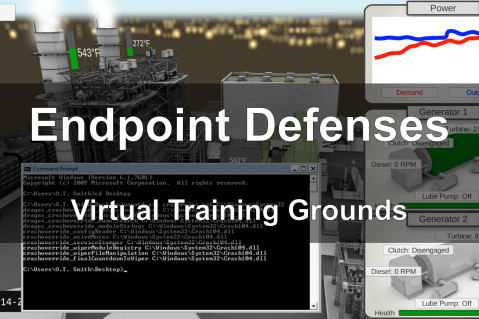
(Lab) Using lessons learned from successfully attacking the power plant in Chapters 1 and 2, learn how to harden and secure ICS assets using various endpoint defenses. After completing this chapter, users will be able to:
• Validate operator inputs on HMIs
• Add safety checks to PLC programs
• Scan for malware using YARA-X
• Investigate Windows event logs, and set up audit policies
• Use the Windows powershell command line (ps, select-string, netstat)
• Use intermediate level Linux commands (ps, grep, netstat)
• Investigate Linux logs
• Write basic Linux host firewall rules
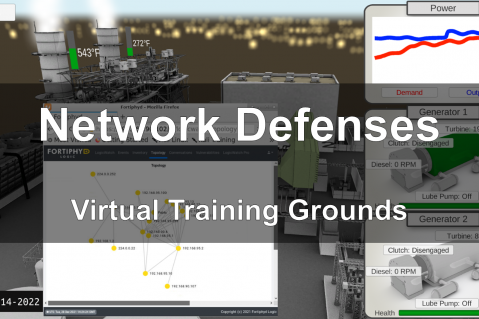
(Lab) Using lessons learned from successfully attacking the power plant, learn how to harden the ICS network with firewalls, monitoring systems, and intrusion detection systems.. After completing this chapter, users will be able to:
• Monitor network flows
• Install and monitor an inline network intrusion detection system
• Investigate DNS exfiltration traffic
• Use Fortiphyd Logic's LogicWatch product to monitor the ICS network
• Write basic network firewall rules
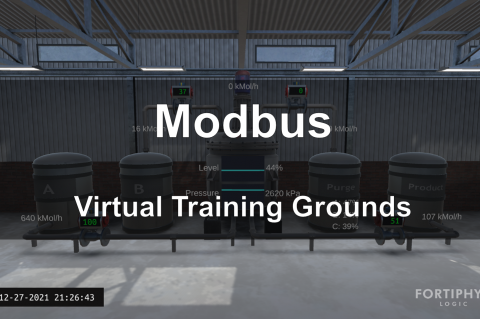
(Lab) In this advanced level module, take a deep dive into the Modbus traffic of a simulated chemical plant to understand how to attack and harden one of the most common ICS protocols in use. After completing this chapter you will be able to
(Lab) The Industrial IoT promises to make ICS more efficient than ever before, but with great technology comes great responsibility to secure it. In this course, exploit and mitigate common IIoT vulnerabilities in a simulated power plant. After completing this chapter you will be able to:
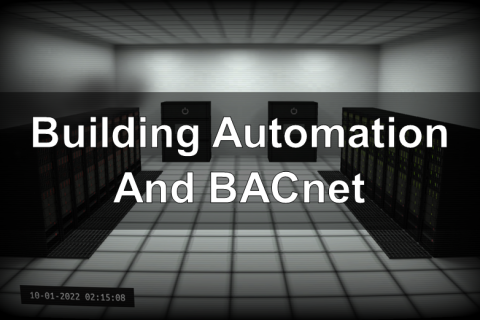
(Lab) In this advanced level module, get hands on experience with the BACnet protocol in a simulated server room cooling system to understand how to attack and harden one of the most common building automation system (BAS) protocols in use. After completing this chapter you will be able to
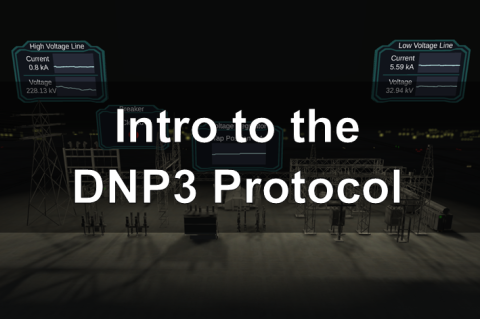
(Lab) DNP3 is one of the most popular protocols used in SCADA networks like the power grid, water utilities, and train systems. In this hands-on lab course, learn some of the biggest ways attackers can abuse DNP3 and what you can do to prevent and detect their attacks.
After completing this module, users will be able to:
After completing this module, users will be able to:
After completing this module, users will be able to:
After completing this module users will be able to:
After completing this module users will be able to:
After completing this module users will be able to:
After completing this module users will be able to:
After completing this module users will be able to
After this course, users will be able to:
(Lab) So much attention is paid to securing industrial control systems at various levels in the network, but what can controls engineers do to help secure the PLCs that are actually translating digital commands into physical actions?
In this 4-part series learn how the "Top 20 Secure PLC Coding Practices" provides PLC programmers with the first ever industry guidelines for adding basic security to the PLC programming itself. Practice the various guidelines in simulated ICS networks including power generation, power distribution, and building automation networks.
Part 4 of the 4-part series covers:
(Lab) So much attention is paid to securing industrial control systems at various levels in the network, but what can controls engineers do to help secure the PLCs that are actually translating digital commands into physical actions?
In this 4-part series learn how the "Top 20 Secure PLC Coding Practices" provides PLC programmers with the first ever industry guidelines for adding basic security to the PLC programming itself. Practice the various guidelines in simulated ICS networks including power generation, power distribution, and building automation networks.
Part 3 of the 4-part series covers:
(Lab) So much attention is paid to securing industrial control systems at various levels in the network, but what can controls engineers do to help secure the PLCs that are actually translating digital commands into physical actions?
In this 4-part series learn how the "Top 20 Secure PLC Coding Practices" provides PLC programmers with the first ever industry guidelines for adding basic security to the PLC programming itself. Practice the various guidelines in simulated ICS networks including power generation, power distribution, and building automation networks. Part 2 of the 4-part series covers:
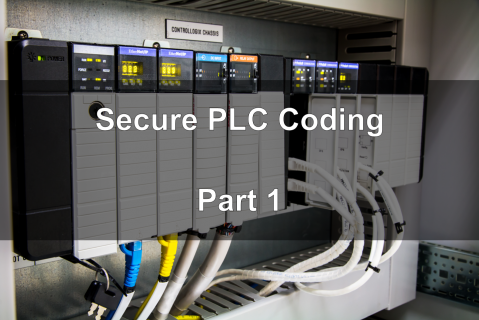
(Lab) So much attention is paid to securing industrial control systems at various levels in the network, but what can controls engineers do to help secure the PLCs that are actually translating digital commands into physical actions?
In this 4-part series learn how the "Top 20 Secure PLC Coding Practices" provides PLC programmers with the first ever industry guidelines for adding basic security to the PLC programming itself. Practice the various guidelines in simulated ICS networks including power generation, power distribution, and building automation networks. Part 1 of the 4-part series covers: